Residential Proxies Explained How to Access Hidden Prices and Regional Content in 2026
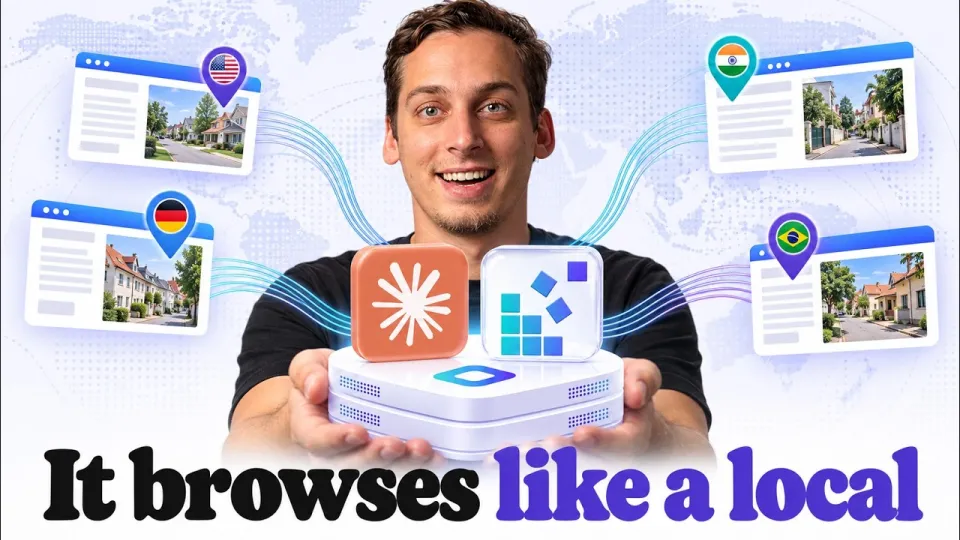
Video: This Claude Code Agent Uses Residential Proxies to Find Hidden Prices
· based on the channel Lukas Margerie
Residential proxies are specialized proxy servers that route your internet requests through real residential IP addresses assigned by Internet Service Providers (ISPs). Unlike datacenter proxies, which come from centralized server farms, residential proxies appear as genuine home users to websites. This unique feature allows users to bypass geolocation restrictions and access localized content or pricing that would otherwise remain hidden.
What Are Residential Proxies and How Do They Work
Residential proxies function by assigning your web requests an IP address linked to a real residential location. This means when you visit a site, it sees a legitimate home ISP connection rather than a data center or VPN IP address, which are often flagged or blocked. Websites commonly use IP-based geofencing for regional pricing, content licensing, or fraud prevention, making residential proxies essential for accessing such localized data.
The key technical advantage is that residential proxies rotate IP addresses across different households, making detection difficult. Each request can exit through a different residential IP, simulating natural user traffic from various locations globally.
Residential Proxies vs VPNs and Datacenter Proxies
VPNs route all traffic through a single server, often from a datacenter IP. While VPNs encrypt data and can mask your location, websites frequently detect and block these IPs due to their association with shared commercial servers. Datacenter proxies, though fast and cheap, are easily identified and blocked because they use IPs from cloud providers rather than home ISPs.
Residential proxies, by contrast, provide a more authentic user profile by utilizing IPs from actual homes. This reduces the chance of blocking and enables access to region-specific offerings such as localized prices on platforms like Spotify, Canva, Netflix, and ChatGPT.
How Rotating Residential Proxies Enhance Web Scraping
Rotating proxies automatically assign a new IP address for every connection or request. This prevents websites from detecting scraping activity based on repetitive IP usage. When combined with residential proxies, rotating IPs simulate diverse user access across multiple locations.
This approach is critical for large-scale web scraping projects targeting pricing pages or geo-targeted content. For example, a Claude Code agent can open pricing pages from real home connections in countries like the US, Germany, Brazil, and India, then aggregate results for a comprehensive price comparison without manual intervention.
Using Residential Proxies for Regional Pricing and Geo-Targeting
Many SaaS providers and digital services implement regional pricing strategies, offering different prices for the same subscription based on the user's country. Spotify charges $12.99 per month in the US but only about $1.45 in India, while Canva Pro costs $144 annually in the US versus $42 in India.
Residential proxies enable businesses and consumers to uncover these hidden prices by simulating local user access. This is invaluable for market research, competitive analysis, and price intelligence.
Tools and Services for Residential Proxy Access
DataImpulse is a leading residential proxy provider offering reliable IPs across multiple countries, ideal for web scraping and geo-targeting needs. Their service supports rotating residential IPs, ensuring fresh connections that evade detection.
Claude Code is an AI-driven agent that automates web scraping tasks combined with residential proxies to efficiently extract localized pricing data. Playwright is a browser automation tool that can be used alongside residential proxies to script interactions with websites for data collection.
Common Questions About Residential Proxies
Users often ask about the differences between VPNs and proxies, the legality of using proxies for scraping, and how to choose the best residential proxy provider. Residential proxies are legal when used ethically, such as for market research or accessing content you are entitled to. Selecting a provider with a large IP pool and good geographic coverage is crucial for effective use.
Useful Links
- DataImpulse residential proxy service: https://dataimpulse.com/?utm_source=youtube&utm_medium=video&utm_campaign=lukasmargerie
- Claude Code AI agent: https://www.claude.com/product/claude-code
- Playwright browser automation: https://playwright.dev
Summary
Residential proxies offer a powerful solution for accessing region-specific prices and content by routing traffic through real home ISP connections. Compared to VPNs and datacenter proxies, they provide authentic IPs that reduce the risk of blocking and enable granular geo-targeting. Tools like DataImpulse and Claude Code leverage residential proxies to automate price comparisons and web scraping across countries efficiently.
For anyone interested in unlocking hidden prices or performing localized data collection in 2026, residential proxies are an essential technology. Explore the DataImpulse residential proxy network to get started and benefit from genuine home IPs worldwide. This analysis is based on insights from the channel Lukas Margerie, which demonstrates practical use cases of residential proxies combined with AI agents for web scraping.
Key takeaways
- Residential proxies route traffic through real home ISPs, making requests appear local.
- They enable access to geo-specific prices and content hidden from global users.
- Rotating residential proxies provide fresh exit IPs for each connection, avoiding detection.
- DataImpulse is a leading provider of residential proxies suitable for web scraping.
- Claude Code agent uses residential proxies to automate regional price comparisons.
Source: This Claude Code Agent Uses Residential Proxies to Find Hidden Prices · Markdown version
Questions & answers
What is the main difference between a residential proxy and a VPN?
A residential proxy routes each request through a real home ISP IP address, making it appear as a local user, while a VPN routes all traffic through a single server, often a datacenter IP, which is easier for websites to detect and block.
Why are residential proxies important for accessing regional pricing?
Because they make your requests appear to come from a specific country’s home internet connection, enabling access to prices and content tailored to that region that might be hidden from other locations.
Can residential proxies be detected or blocked by websites?
While residential proxies are harder to detect than datacenter IPs, websites may still block them if suspicious traffic patterns are detected. Rotating proxies and using reputable providers reduce this risk significantly.
How can I start using residential proxies for web scraping or price comparison?
You can sign up with residential proxy providers like DataImpulse, which offer rotating residential IPs worldwide. Tools such as Claude Code and Playwright can automate scraping tasks using these proxies efficiently.